

Most british event planners in Central Europe and the Arabian Peninsula strive to impress clients with entertainment that stands out from the usual choices. Bavarian yodelling, rooted in Alpine tradition and history, offers an unforgettable experience that blends musical artistry with cultural storytelling. With more than 500 years of documented performance history, yodelling has evolved from mountain communication into a sought-after entertainment option for corporate events, promising a distinctive blend of authenticity and audience engagement rarely found elsewhere.
Table of Contents
- Defining Bavarian Yodelling and Its Roots
- Traditional Styles and Modern Interpretations
- Performance Techniques and Event Integration
- Cultural, Legal, and Practical Considerations
- Common Misconceptions and Booking Insights
Key Takeaways
| Point | Details |
|---|---|
| Cultural Significance | Bavarian yodelling is a vital expression of Alpine cultural heritage, showcasing deep historical roots and community identity. |
| Performance Techniques | Mastery of pitch transitions and emotional expression are crucial for authentic yodelling performances. |
| Event Integration | Yodelling can transform events by creating immersive experiences if approached with cultural respect and understanding. |
| Booking Considerations | Selecting skilled performers with cultural knowledge is essential to present yodelling as a meaningful art form rather than mere entertainment. |
Defining Bavarian Yodelling and Its Roots
Bavarian yodelling represents a profound musical tradition deeply rooted in Alpine culture, emerging from the mountainous regions of Central Europe. Originating as a practical communication method among shepherds and herders, this unique vocal technique involves rapid pitch transitions between chest and head voice registers, enabling sound transmission across steep valleys and rugged landscapes.
The art of yodelling traces its historical origins back to the 16th century, where it served critical functional purposes for mountain communities. Herders developed this distinctive vocal technique to communicate across vast distances, with the sharp register changes allowing sound to travel effectively through mountainous terrain. By the 19th century, yodelling had transformed from a purely practical communication method into a rich folk musical tradition representing Alpine cultural identity.
During significant historical periods, such as the Napoleonic Wars, yodelling emerged as more than just a communication tool. It became a powerful cultural symbol of regional unity and resistance, embodying the spirit of Alpine communities. The vocal technique reflects not just musical skill, but also a deep connection to landscape, community, and historical resilience.
Pro tip: When incorporating Bavarian yodelling into events, understand its cultural context to appreciate the nuanced performance beyond mere entertainment.
Traditional Styles and Modern Interpretations
Traditional Bavarian yodelling encompasses a rich tapestry of vocal techniques that have evolved through generations of Alpine musical expression. Historically rooted in pastoral communication, these distinctive vocal styles originally emerged as a practical method for herders to communicate across mountainous landscapes, characterised by rapid pitch transitions and unique tonal variations.
The vocal technique is fundamentally defined by its iconic sound, which involves dramatic shifts between chest and head voice registers. Modern interpretations have expanded these traditional forms through creative cross-genre experiments, blending authentic Alpine sounds with contemporary musical styles. Musicians now incorporate yodelling into folk revivals, popular music, and cultural festivals, demonstrating the remarkable adaptability of this vocal art form while maintaining its deep connection to Bavarian cultural heritage.

Contemporary yodellers often draw inspiration from traditional styles, mimicking natural alpine sounds such as bird calls and wind patterns. This approach preserves the authenticity of the technique while allowing for artistic innovation. The vocal style has transitioned from a purely functional communication method to a sophisticated musical expression that bridges rural traditions with urban performance spaces, creating a dynamic cultural dialogue between past and present.
Pro tip: When exploring Bavarian yodelling performances, listen for the subtle nuances that connect traditional alpine sounds with modern musical interpretations.
Here’s a summary of the main traditional and modern approaches to Bavarian yodelling:
| Approach Type | Distinctive Features | Typical Musical Context |
|---|---|---|
| Traditional Yodelling | Rapid chest-head pitch shifts | Folk gatherings and rural events |
| Modern Interpretation | Fusion with pop and jazz | Cultural festivals, urban shows |
Performance Techniques and Event Integration
Bavarian yodelling represents a sophisticated vocal art form that requires exceptional technical skill and cultural understanding. Performance techniques involve intricate vocal register shifts between chest voice and falsetto, producing distinctive syllabic sounds that communicate both musical expression and cultural heritage. These rapid tonal transitions demand significant vocal control, making yodelling a challenging yet captivating performance technique.
In corporate and cultural event contexts, yodelling serves multiple functions beyond pure musical entertainment. Traditional performances frequently incorporate multi-part harmonies that can be adapted to various event atmospheres, from formal corporate gatherings to festive cultural celebrations. The versatility of yodelling allows performers to create immersive experiences that connect audiences directly with Alpine musical traditions, transforming standard entertainment into a rich cultural interaction.
Successful event integration requires understanding the nuanced performance techniques that make yodelling unique. Performers must balance technical precision with emotional expression, using vocal agility to create sounds that mimic natural alpine environments. This approach transforms yodelling from a mere musical performance into a storytelling experience that transports audiences to the mountainous regions of Bavaria, creating memorable and engaging event moments that go far beyond conventional musical entertainment.
Pro tip: When planning yodelling performances, consider the acoustic properties of your venue to ensure the vocal subtleties are fully appreciated by your audience.
Cultural, Legal, and Practical Considerations
Bavarian yodelling represents far more than a musical performance; it embodies a profound cultural heritage with significant legal and practical implications. UNESCO heritage nomination efforts highlight the tradition’s deep cultural significance, seeking to protect and preserve this unique vocal art form for future generations. These initiatives underscore the importance of maintaining authentic cultural practices in an increasingly globalised world, recognising yodelling as more than entertainment but as a living cultural expression.
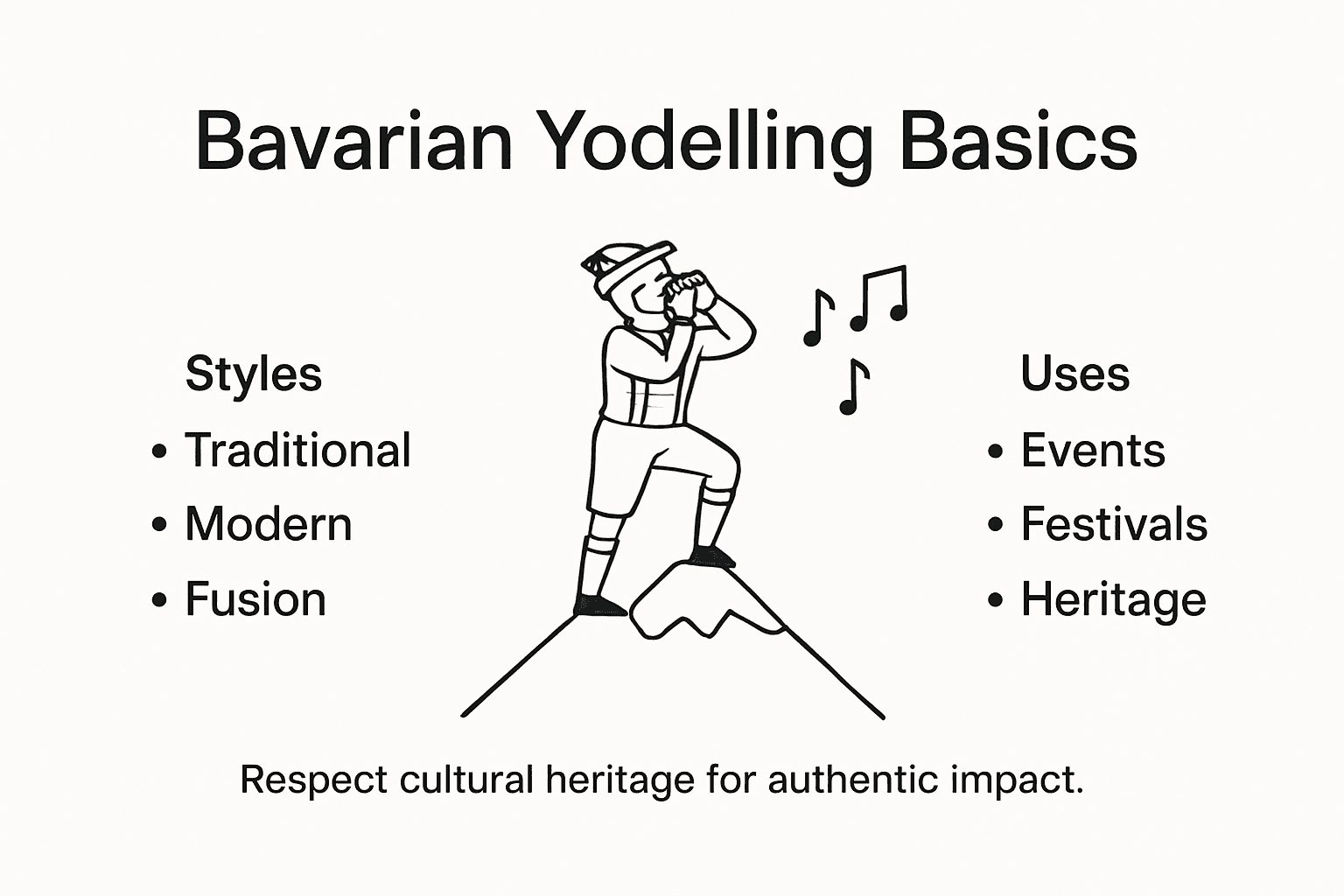
Legal frameworks are emerging to safeguard yodelling’s intellectual and cultural integrity, addressing critical concerns about cultural appropriation and authentic representation. Event organisers must navigate complex considerations, balancing respectful presentation with audience engagement. This involves understanding the nuanced historical context, ensuring performers are properly trained and representing the tradition with genuine cultural sensitivity, and avoiding superficial or stereotypical representations that might diminish the art form’s profound cultural significance.
Practical implementation of yodelling in events requires a comprehensive approach that respects both artistic integrity and audience expectations. Community-based networks of yodelling practitioners play a crucial role in maintaining performance standards, providing training, and ensuring that each performance represents a genuine connection to Alpine cultural traditions. This approach transforms yodelling from a mere musical novelty into a meaningful cultural exchange, creating deep and memorable experiences that transcend typical event entertainment.
Pro tip: When incorporating yodelling into events, consult with cultural practitioners to ensure authentic and respectful representation.
The following table outlines key legal and practical considerations essential for hosting authentic yodelling events:
| Aspect | Importance | Recommended Practice |
|---|---|---|
| Cultural Integrity | Preserves Alpine heritage | Consult local practitioners |
| Legal Protection | Prevents misuse and misrepresentation | Follow licensing and endorsement guidelines |
| Community Involvement | Ensures quality and authenticity | Build relationships with regional networks |
Common Misconceptions and Booking Insights
Bavarian yodelling suffers from numerous persistent misconceptions that undermine its artistic complexity and cultural significance. Far from being a simplistic mountain shouting technique, yodelling represents a sophisticated vocal art form requiring exceptional skill and emotional intelligence. Artists like Franzl Lang, known as the ‘Yodelking’, demonstrated that this vocal tradition transcends stereotypical perceptions, presenting it as a professional performance art with remarkable depth and popular appeal.
Booking yodelling performers demands nuanced understanding beyond surface-level entertainment, recognising the tradition’s rich cultural layers and precise technical requirements. Event organisers must look beyond novelty act expectations, seeking performers who can authentically represent the vocal technique’s emotional and cultural complexities. This approach ensures performances that genuinely connect audiences to Alpine musical heritage, transforming yodelling from a perceived gimmick into a meaningful cultural experience.
Successful event integration requires challenging preconceived notions about yodelling. Professional performers bring intricate vocal techniques, cultural knowledge, and adaptable performance styles that can suit diverse event contexts. By selecting practitioners who understand both the technical demands and cultural significance of yodelling, event planners can create memorable experiences that respect the art form’s authenticity while engaging contemporary audiences.
Pro tip: When booking yodelling performers, prioritise artists with demonstrable cultural knowledge and technical mastery over those offering mere stereotypical performances.
Elevate Your Event with Authentic Bavarian Yodelling and Oompah Music
Bavarian yodelling captures the rich alpine heritage and intricate vocal artistry that transform ordinary events into memorable cultural experiences. If your event requires more than just entertainment but a genuine connection to Bavarian tradition fused with lively, crowd-pleasing oompah music, explore the unique offerings of Elmar’s Oompah Band. They expertly blend rapid yodelling techniques with classic polkas, waltzes and international party hits to engage audiences with authenticity and flair. Discover how yodelling’s dramatic pitch shifts and the band’s dynamic presence create an atmosphere brimming with alpine spirit and professional showmanship.
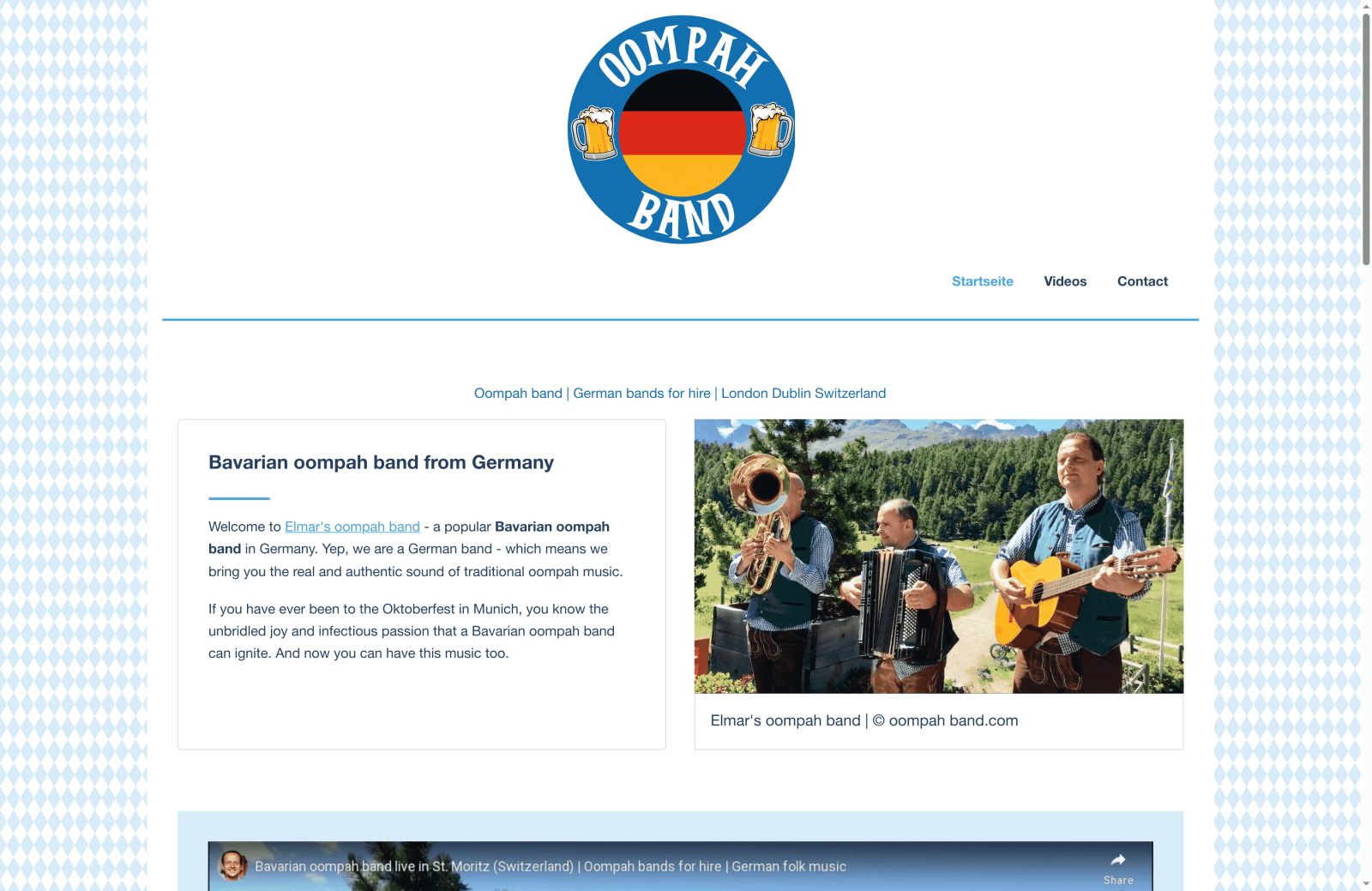
Don’t settle for superficial renditions of alpine music. Choose performers who respect cultural integrity and deliver technical mastery. Visit Allgemein – Oompah Band to learn about our approach. Unlock a rich event experience that resonates with your guests and lifts your corporate gathering beyond the usual. Book Elmar’s Oompah Band now at https://oompah-band.com and let authentic Bavarian yodelling add alpine impact to your next event.
Frequently Asked Questions
What is Bavarian yodelling and its historical significance?
Bavarian yodelling is a vocal technique with roots in Alpine culture, originally developed for communication among shepherds. Its historical significance includes serving as a cultural symbol of regional unity and resilience, particularly during the Napoleonic Wars.
How do traditional and modern yodelling styles differ?
Traditional yodelling focuses on rapid pitch transitions and unique tonal variations for communication and folk music contexts. Modern interpretations blend these traditional forms with contemporary genres, expanding the range and context in which yodelling is performed.
What performance techniques are essential for successful yodelling?
Successful yodelling involves intricate vocal register shifts between chest voice and falsetto, requiring exceptional vocal control and emotional expression. Performers often mimic natural alpine sounds, enhancing the music’s connection to the environment.
What are some cultural considerations when incorporating yodelling into events?
Incorporating yodelling into events requires understanding its cultural context and ensuring authentic representation. Event planners should consult local practitioners to respect the tradition’s heritage and avoid superficial portrayals.