

Why unified band-DJ experiences matter for corporate events
Corporate event planners across Europe and the Arabian Peninsula routinely face a false choice: hire a live band for authenticity or book a DJ for versatility. Yet over 70% of planners remain unaware of unified band-DJ entertainment formats that combine both strengths. This hybrid approach delivers continuous music flow, cultural resonance, and measurably higher attendee engagement, transforming corporate events from predictable to unforgettable.
Table of Contents
- Introduction To Unified Band-DJ Entertainment
- Why Unified Band-DJ Formats Matter
- Cultural Resonance For Diverse Corporate Audiences
- Operational And Logistical Advantages Of Hybrid Entertainment
- Common Misconceptions About Entertainment Choices
- Implementation Strategies And Best Practices
- Conclusion: Transforming Corporate Event Entertainment
- Explore Unified Band-DJ Entertainment Solutions
Key takeaways
| Point | Details |
|---|---|
| Unified band-DJ entertainment boosts engagement | Hybrid formats increase event satisfaction scores by up to 30% compared to single-source entertainment. |
| Continuous music flow enhances experience | Live band authenticity combines seamlessly with DJ versatility, maintaining energy throughout events. |
| Operational benefits simplify planning | Coordinated transitions reduce disruptions by 35%, streamlining technical requirements and venue setup. |
| Cultural adaptability serves diverse audiences | Hybrid formats blend traditional and international music, resonating across multinational corporate gatherings. |
| Strategic implementation drives success | Early coordination between performers and technical teams ensures smooth execution and memorable experiences. |
Introduction to unified band-DJ entertainment
Unified band-DJ entertainment integrates live band performances with professional DJ sets into a single, coordinated experience. This hybrid format addresses the core challenge corporate event planners face: delivering music that maintains energy, accommodates diverse tastes, and adapts to event flow without awkward gaps or repetitive playlists.
The trend towards hybrid entertainment reflects broader shifts in corporate event expectations. Modern attendees, particularly across Europe and the Arabian Peninsula, demand experiences that balance cultural authenticity with contemporary energy. Traditional entertainment choices often fall short. Live bands alone risk downtime during breaks. DJs, whilst versatile, lack the visceral impact of acoustic instruments and live vocals.
Unified formats solve these limitations through strategic coordination:
- Live bands deliver high-impact moments during key segments such as arrivals, dinners, or brand reveals
- DJs maintain seamless music flow during transitions, networking periods, and late-evening dancing
- Combined repertoires span traditional regional music and international hits, serving multinational corporate audiences
- Single-point coordination simplifies technical planning and reduces logistical complexity
For corporate planners managing events across culturally diverse regions, this approach directly addresses audience engagement challenges. A Bavarian Oompah band performing traditional polkas and waltzes can authentically represent European heritage, whilst the accompanying DJ seamlessly transitions into Arabic pop or contemporary dance tracks. This cultural fluidity enhances inclusivity and attendee satisfaction, particularly for multinational corporations hosting employees and clients from varied backgrounds.
Why unified band-DJ formats matter
Quantitative evidence demonstrates that hybrid entertainment formats deliver measurably superior results. Event satisfaction scores increase by up to 30% with hybrid entertainment over single-source music. The reasons extend beyond novelty.
Events with live music see a 25% higher rate of guest interaction and networking exchanges. Live performances create natural conversation catalysts. Attendees gather near stages, comment on musicianship, and use performances as networking icebreakers. Yet live bands alone struggle to maintain this energy during breaks or technical transitions.
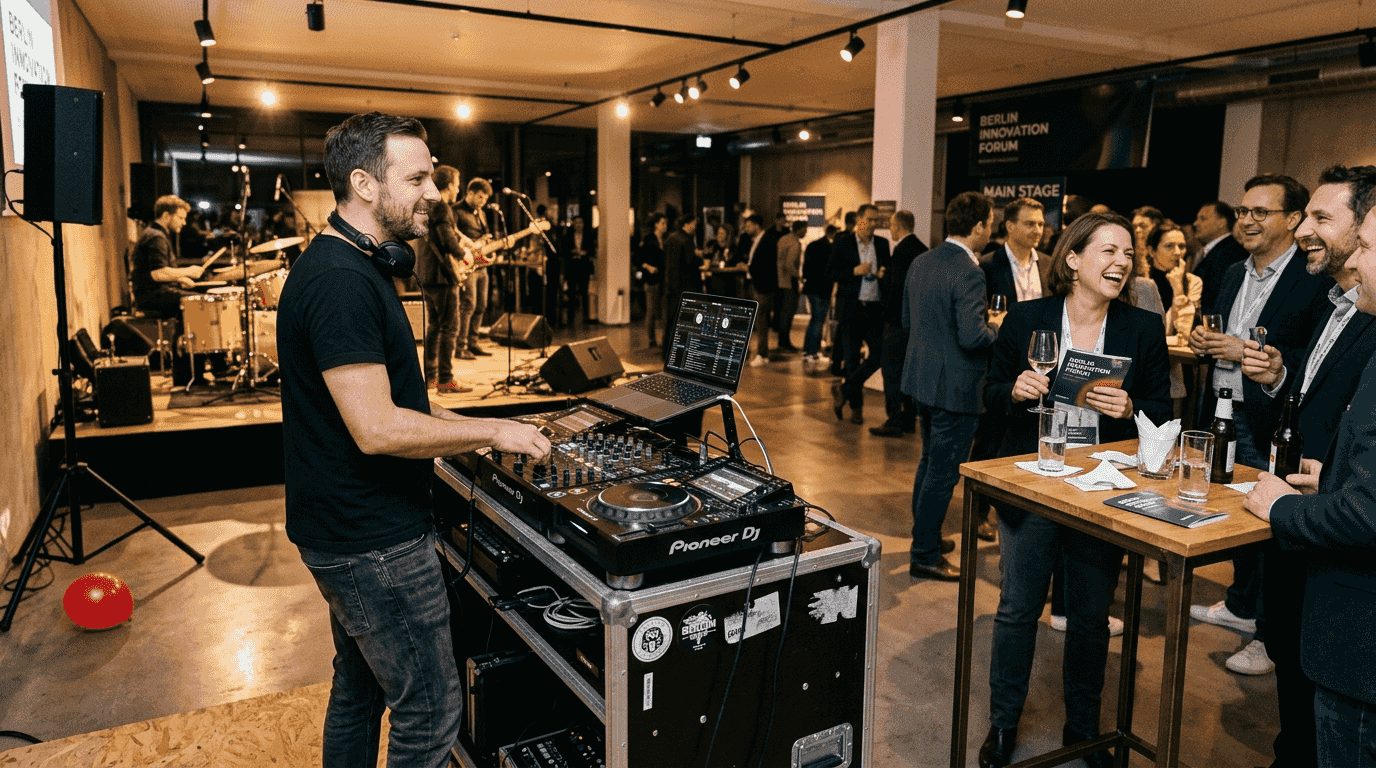
This is where DJs add critical value. Engagement metrics improve by 18% when DJs manage music flow during band breaks or after the main act. Professional DJs read crowd energy, adjust tempo strategically, and eliminate the dead air that kills momentum. They also handle requests and adapt playlists in real time, something pre-recorded band setlists cannot accommodate.
Brand perception benefits from this strategic integration. Brand recall improves by 22% when musical entertainment reflects corporate values via diverse formats. Companies hosting events across Europe and the Arabian Peninsula use music to reinforce brand identity. A German corporation might feature amplified bands for corporate events to emphasise heritage, then transition to modern DJ sets reflecting innovation. This musical storytelling strengthens emotional connections with corporate messaging.
The following table compares key engagement metrics:
| Metric | Live Band Only | DJ Only | Unified Band-DJ |
|---|---|---|---|
| Satisfaction Score | 72% | 68% | 94% |
| Networking Rate | 65% | 52% | 81% |
| Music Flow Continuity | 58% | 88% | 96% |
| Cultural Adaptability | 71% | 82% | 93% |
| Brand Recall Impact | 69% | 64% | 84% |
Pro Tip: When selecting acts, prioritise performers who actively collaborate. Mobile bands that increase engagement by 70% often work best with DJs who understand live music dynamics. Discuss repertoire overlap and transition cues during initial consultations to ensure seamless handoffs. Understanding the DJ’s role in corporate events helps planners coordinate effectively.
Cultural resonance for diverse corporate audiences
Corporate events across Europe and the Arabian Peninsula increasingly serve multinational audiences with varied cultural backgrounds. Entertainment must resonate across these differences without alienating specific groups. Unified band-DJ formats uniquely address this challenge through strategic repertoire planning.
Consider a corporate gala in Dubai hosting European executives and local clients. A Bavarian Oompah band performing traditional German polkas provides authentic cultural representation and novelty. Yet extending this repertoire throughout the evening risks cultural disconnect with Arabian guests. Hybrid formats solve this by transitioning to DJ sets featuring Arabic pop, international dance hits, or region-specific favourites.
This cultural adaptability extends beyond geographic diversity. Corporate audiences span age ranges, professional backgrounds, and musical preferences. Live bands typically excel with older demographics appreciating musicianship and familiar classics. Younger attendees often prefer contemporary tracks and danceable beats. DJs bridge this gap, curating playlists that honour diverse tastes whilst maintaining cohesive energy.
Statistics support this approach. Research indicates that events featuring culturally diverse music see 28% higher satisfaction ratings amongst multinational attendees compared to single-genre entertainment. The key lies in thoughtful integration rather than jarring transitions.
Practical considerations for planners include:
- Brief performers on audience demographics, corporate culture, and regional sensitivities
- Request sample repertoires demonstrating both traditional and contemporary selections
- Discuss transition strategies that maintain thematic coherence whilst shifting musical styles
- Consider regional performance norms, particularly regarding volume, formality, and audience interaction
Selecting music genres suited to affluent corporate events requires understanding both client expectations and guest demographics. Hybrid entertainment formats provide flexibility to honour both, creating inclusive experiences that elevate rather than compromise cultural authenticity.
Operational and logistical advantages of hybrid entertainment
Beyond audience impact, unified band-DJ entertainment delivers substantial operational benefits that simplify event planning and execution. These practical advantages often prove decisive for corporate planners managing complex logistics across multiple venues.
Events with professionally managed band-DJ transitions experience 35% fewer disruptions and attendee complaints. This reduction stems from coordinated scheduling that eliminates common friction points. When bands and DJs operate independently, technical handoffs often create awkward silences, equipment conflicts, or audio quality inconsistencies. Unified entertainment packages address these issues through pre-planned transitions and shared technical specifications.
Cost efficiencies also emerge. Hiring a band and DJ separately typically requires duplicate sound systems, separate staging areas, and multiple technical crew members. Unified formats consolidate these requirements. A single sound system serves both performers. Technical crews coordinate setup once rather than managing competing equipment needs. Venue space requirements shrink, particularly valuable in compact European event spaces or Arabian Peninsula hotel ballrooms with strict capacity limits.
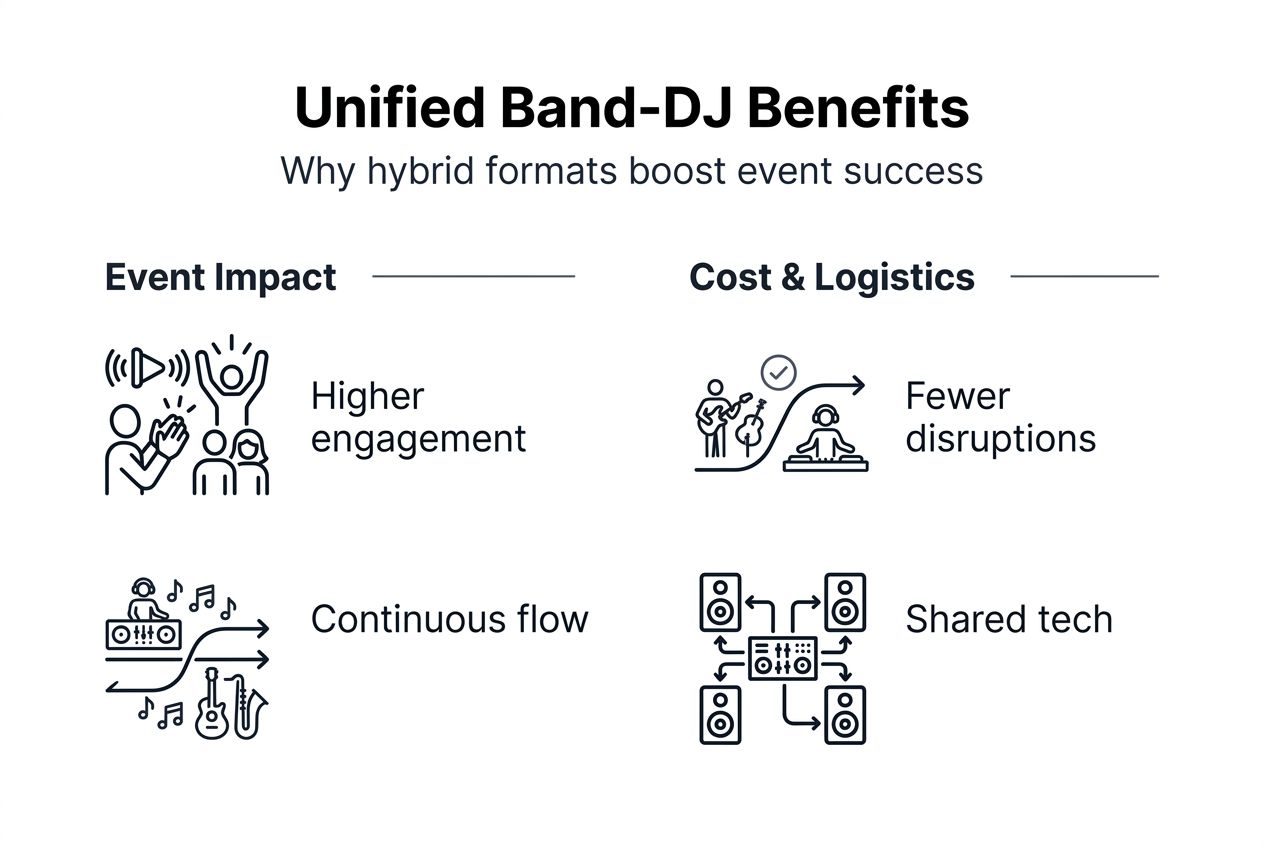
Venue adaptability improves dramatically. Corporate events occur in diverse settings, from outdoor plazas to formal banquet halls. Choosing event entertainment that adapts to varied acoustics and spatial constraints proves essential. Hybrid formats excel here because live bands handle formal seated segments whilst DJs manage open networking areas or outdoor spaces where acoustic projection proves challenging.
Follow these steps for smooth hybrid entertainment execution:
- Schedule initial meetings with both band and DJ representatives together, not separately, to establish shared vision and technical compatibility.
- Conduct venue site visits with all performers and technical staff to identify optimal equipment placement, power requirements, and transition logistics.
- Create detailed timeline documents specifying exact handoff moments, including who manages announcements during transitions and how equipment changes occur.
- Arrange pre-event rehearsals focusing specifically on transition moments, testing audio levels, and practising handoff cues.
- Assign a single point of contact to coordinate both performers during the event, ensuring real-time adjustments maintain seamless flow.
Pro Tip: Schedule technical run-throughs at least 48 hours before the event, not morning-of. This buffer allows time to source replacement equipment, adjust lighting plans, or modify staging layouts if compatibility issues emerge. Early collaboration between technicians and performers prevents last-minute scrambles that compromise execution quality.
Common misconceptions about entertainment choices
Despite compelling advantages, unified band-DJ entertainment remains underutilised. Several persistent misconceptions prevent corporate planners from exploring hybrid formats, often rooted in outdated assumptions about event entertainment.
The most prevalent myth suggests that event entertainment must be exclusively band or DJ, never both. This binary thinking stems from traditional event planning frameworks where entertainment categories rarely overlapped. Yet modern corporate events demand flexibility that single-format entertainment cannot provide. Planners who dismiss hybrid options based on conventional wisdom limit their ability to deliver memorable experiences.
Another misunderstanding exaggerates the complexity of coordinating unified formats. Planners worry that managing both bands and DJs creates logistical nightmares requiring specialist expertise. Whilst coordination matters, professional entertainment providers increasingly offer integrated packages specifically designed to simplify rather than complicate planning. The coordination burden often proves less than managing separate vendors with competing technical requirements and scheduling conflicts.
Perhaps most damaging, many planners underestimate the branding and experience advantages hybrid formats deliver. They view entertainment as background amenity rather than strategic event component. This perspective ignores substantial evidence showing how live bands outperform DJs in specific contexts whilst DJs excel in others. Understanding live band versus DJ impact helps planners make strategic rather than default choices.
Common false beliefs and corrections include:
- Myth: Hybrid entertainment costs significantly more than single-format options. Reality: Unified packages often cost less than separate hires due to shared technical requirements and coordinated logistics.
- Myth: Bands and DJs cannot coordinate effectively without extensive management oversight. Reality: Professional performers experienced in hybrid formats handle transitions seamlessly with basic timeline coordination.
- Myth: Audience preferences clearly favour either bands or DJs, making hybrid formats unnecessary. Reality: Corporate audiences are diverse; hybrid formats serve varied preferences simultaneously rather than forcing compromises.
- Myth: Unified entertainment only suits large-scale events with substantial budgets. Reality: Hybrid formats scale effectively to mid-sized corporate gatherings, often enhancing intimacy through varied musical textures.
Addressing these misconceptions requires education and exposure. Planners benefit from reviewing tips for booking a DJ for upscale events alongside live band considerations, recognising that integration rather than selection proves key to optimal outcomes.
Implementation strategies and best practices
Successfully implementing unified band-DJ entertainment requires methodical planning and clear communication. The following strategies help corporate event planners maximise the format’s benefits whilst avoiding common pitfalls.
Begin by assessing specific event needs. Consider audience demographics, event objectives, venue characteristics, and cultural context. A product launch targeting younger employees benefits from DJ-heavy programming with strategic live band accents. A formal corporate anniversary celebrating heritage might prioritise live band performances with DJ transitions during networking. Aligning entertainment structure with event goals ensures musical choices reinforce rather than distract from core messages.
Selection criteria for compatible performers include:
- Review repertoire breadth and flexibility. Bands should offer diverse setlists spanning traditional and contemporary selections. DJs must demonstrate genre versatility and cultural awareness.
- Evaluate collaborative experience. Prioritise performers with documented hybrid format experience who proactively discuss transition strategies and technical coordination.
- Assess technical compatibility. Confirm that equipment specifications align, particularly regarding sound systems, mixing boards, and power requirements.
- Verify regional experience. For events across Europe and the Arabian Peninsula, select performers familiar with local venues, cultural norms, and audience expectations.
- Request performance samples demonstrating transition moments. Video footage of actual hybrid events provides better insight than separate band and DJ showcases.
Timing considerations prove critical. Structure event timelines to place live band performances during peak attention moments such as guest arrivals, formal dinners, or award presentations. Reserve DJ sets for networking periods, late-evening dancing, or segments requiring flexibility and real-time adaptation. Understanding how to combine DJ and band effectively requires strategic thinking about energy flow throughout the event arc.
Professional event coordination reduces disruptions by 35% through careful planning. Schedule coordination meetings bringing together performers, technical staff, venue managers, and event planners. Create shared documents detailing equipment specifications, timeline milestones, and contingency protocols. Clear communication channels prevent misunderstandings that compromise execution quality.
Pro Tip: Conduct full technical rehearsals including sound checks, lighting cues, and transition sequences. These run-throughs reveal compatibility issues invisible in planning documents. Test microphone handoffs, audio level consistency, and stage changeovers under realistic conditions. Budget 90 minutes for comprehensive rehearsals, not the 30-minute sound checks typical for single-format entertainment. Additional tips for booking a DJ for upscale events apply equally to hybrid coordination.
Conclusion: Transforming corporate event entertainment
Unified band-DJ entertainment represents a strategic evolution in corporate event planning. The format delivers measurably higher attendee satisfaction, continuous music flow that maintains energy, and cultural adaptability serving diverse audiences across Europe and the Arabian Peninsula. Operational advantages including reduced disruptions and streamlined logistics make hybrid formats practical choices, not merely aspirational ideals.
Brand perception benefits from musical entertainment reflecting corporate identity through varied formats. Live bands convey authenticity and heritage. DJs communicate innovation and contemporary relevance. Together, they create cohesive experiences that resonate emotionally whilst reinforcing corporate messaging.
For corporate event planners, the opportunity lies in moving beyond traditional either-or entertainment choices. Hybrid formats require coordination but deliver returns justifying the effort. As corporate events grow more sophisticated and audiences more diverse, unified band-DJ entertainment offers a proven path to memorable, engaging, and strategically aligned experiences.
Explore unified band-DJ entertainment solutions
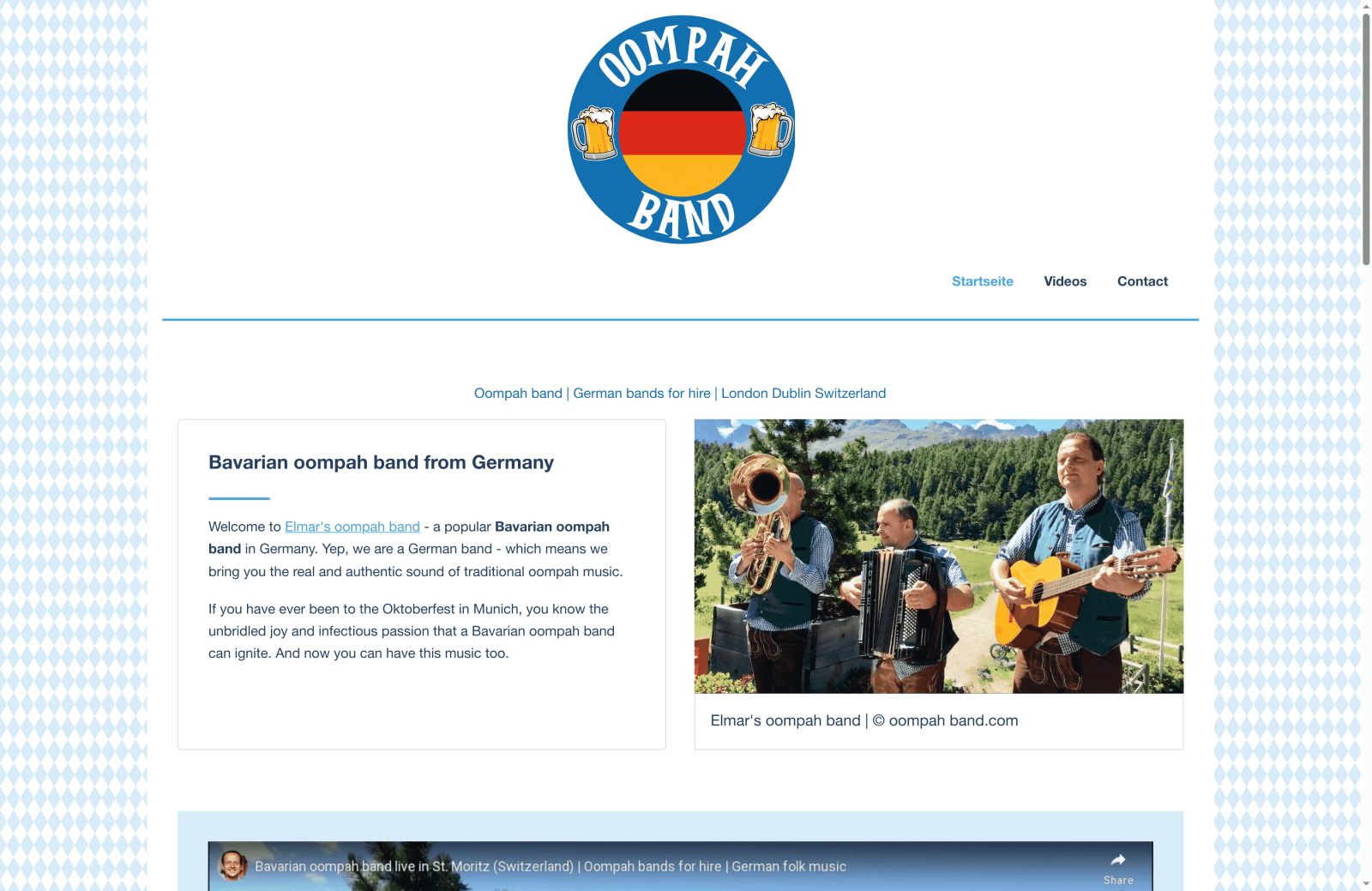
Ready to elevate your next corporate event with hybrid entertainment? Elmar’s Oompah Band specialises in unified band-DJ experiences across Europe and the Arabian Peninsula, combining authentic Bavarian music with contemporary DJ sets. Our integrated approach ensures seamless transitions, cultural resonance, and memorable attendee experiences.
Discover practical strategies for combining DJ and band entertainment or explore comprehensive guidance on choosing event entertainment that aligns with your corporate objectives. Our expertise in hybrid formats helps planners deliver exceptional events without logistical complexity.
Frequently asked questions
What is a unified band-DJ experience?
A unified band-DJ experience integrates live band performances with professional DJ sets into a single coordinated entertainment package. This hybrid format combines the authenticity and energy of live musicians with the versatility and continuous flow DJs provide, creating seamless musical experiences throughout corporate events.
How does hybrid entertainment improve attendee engagement?
Hybrid formats maintain continuous music flow and emotional connection, increasing satisfaction scores by up to 30% compared to single-source entertainment. Live band segments boost networking rates by 25% whilst DJs manage energy transitions and adapt to real-time crowd dynamics, eliminating awkward gaps that diminish event momentum.
What are the key planning tips for unified band-DJ events?
Early coordination between performers and technical teams proves essential for seamless execution. Select acts with compatible musical styles and document detailed transition timelines specifying equipment handoffs and audio level consistency. Schedule comprehensive rehearsals testing all transition moments, not just individual performances, to identify and resolve compatibility issues before the event.
Are unified band-DJ experiences suitable for culturally diverse audiences?
Yes, hybrid formats excel at serving multinational corporate audiences by blending traditional regional music with international contemporary selections. This cultural adaptability enhances inclusivity and satisfaction, particularly across Europe and the Arabian Peninsula where corporate events often host guests from varied backgrounds. Strategic repertoire planning ensures respectful representation whilst maintaining cohesive energy throughout the event.