

More than 80 percent of corporate event planners cite band leadership as a top factor in live music success, yet few truly understand its impact on audience engagement. In Central Europe, managing Oompah band leaders—whether British or German—can shape the entire atmosphere of a large-scale event. This guide reveals practical strategies to empower event organizers with new tools for maximizing performance quality, ensuring each live show is not just seamless but unforgettable.
Table of Contents
- Defining The Band Leader’s Role In Live Music
- Essential Skills For Leading Oompah Bands
- Musical Direction And Event Coordination
- Audience Engagement And Performance Management
- Managing Risks And Logistical Challenges
Key Takeaways
| Point | Details |
|---|---|
| Role of Band Leader | The band leader is crucial in live music, requiring a blend of musical, interpersonal, and organisational skills to enhance audience experience. |
| Leadership Styles | Effective band leaders employ diverse leadership styles, adapting to the specific context to ensure optimal performance outcomes. |
| Audience Engagement | Creating engaging performances that invite audience interaction transforms the event from a mere show into an immersive experience. |
| Risk Management | Meticulous planning and risk management strategies are essential to ensure seamless execution of corporate live music performances. |
Defining the Band Leader’s Role in Live Music
In the dynamic world of live corporate music performance, the band leader emerges as a pivotal figure who transforms musical collaboration into an extraordinary audience experience. Unlike traditional hierarchical leadership models, modern musical leadership represents a nuanced, collaborative approach that extends far beyond mere musical direction.
Research highlights that band leadership is fundamentally about navigating collective musical dynamics, where the leader’s role encompasses more than technical musical coordination. Effective band leaders must synthesise multiple complex skills: managing interpersonal relationships, reading audience energy, making real-time performance adaptations, and maintaining group cohesion during high-pressure corporate events.
The leadership spectrum in live music ranges from authoritarian to democratic styles, with successful band leaders typically adopting a flexible approach tailored to specific performance contexts. Musical leadership involves intricate social navigation, requiring emotional intelligence, clear communication, and the ability to inspire collective musical excellence. Corporate event performances demand leaders who can seamlessly blend technical proficiency with intuitive audience engagement.
Key responsibilities of a band leader in corporate live shows include selecting appropriate repertoire, managing stage transitions, coordinating sound engineering interactions, and maintaining consistent performance quality. They serve as the musical and professional interface between the band and event organisers, ensuring smooth operational execution and memorable musical experiences.
Here’s a comparison of band leadership styles relevant to corporate live music environments:
| Leadership Style | Key Characteristics | Best Use Case | Potential Drawbacks |
|---|---|---|---|
| Authoritarian | Decisive control, clear directives | Large bands, time-critical performances | May stifle creativity |
| Democratic | Collaborative decision-making | Creative, small-group environments | Slower decision process |
| Transformational | Inspires innovation and adaptation | Dynamic events, diverse audiences | Requires high emotional effort |
| Situational | Adapts style to specific context | Changing event conditions | Demands broad skill set |
Pro tip: Always select a band leader with proven experience in corporate event performances, who understands the unique dynamics of professional entertainment environments.
Essential Skills for Leading Oompah Bands
Leading an Oompah band requires a sophisticated blend of musical expertise, interpersonal skills, and cultural understanding that goes far beyond traditional musical performance. The band leader must simultaneously serve as musical director, cultural ambassador, and professional entertainer, creating an immersive experience that captures the spirit of traditional Bavarian music while engaging modern corporate audiences.
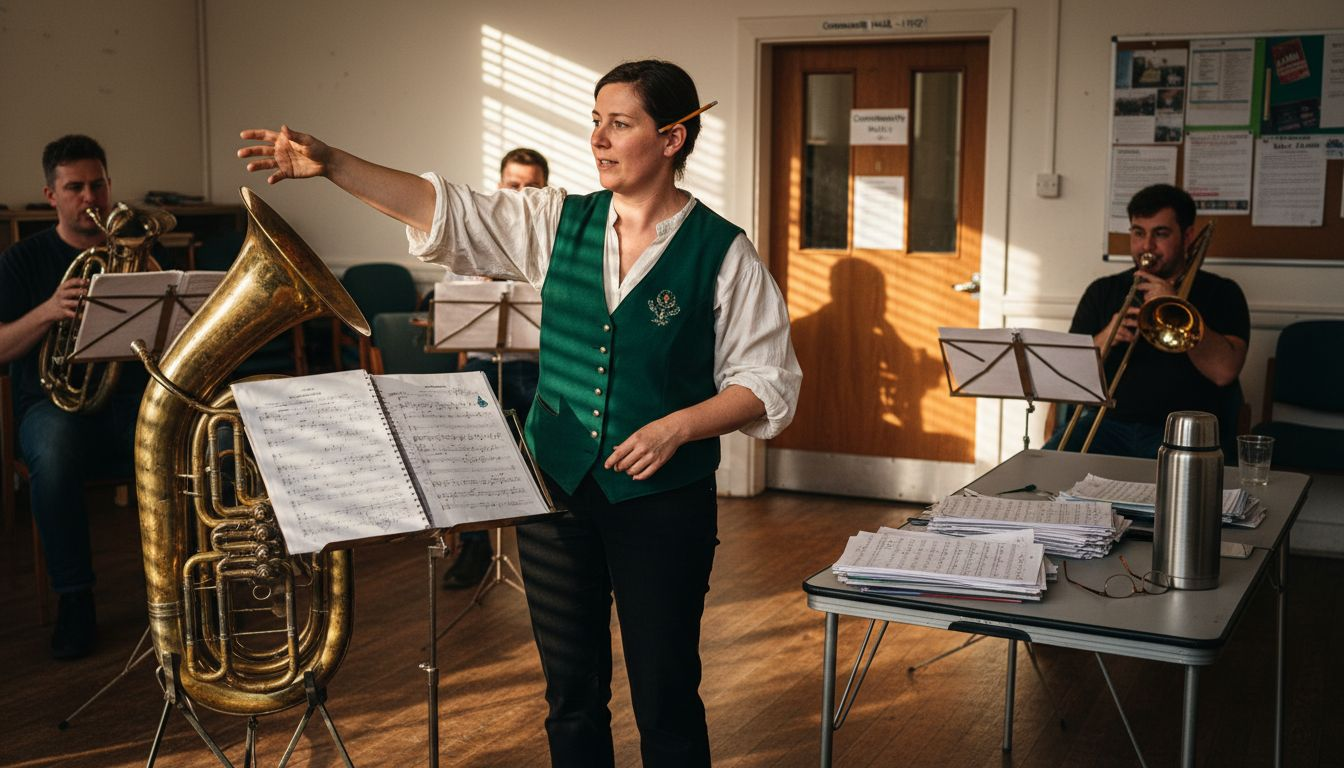
Musical proficiency forms the foundational skill set, with Oompah band repertoire knowledge being critically important. Successful band leaders must demonstrate comprehensive understanding of traditional German musical styles, including polkas, waltzes, and folk tunes, while also possessing the flexibility to integrate contemporary musical elements. This requires deep technical musical skills, including instrumental mastery, arrangement capabilities, and the ability to read and respond to audience energy in real-time.
Beyond musical capabilities, exceptional Oompah band leaders must excel in performance management and interpersonal dynamics. They need robust communication skills to coordinate band members, negotiate with event organisers, and create a cohesive musical experience. This includes managing diverse personalities, maintaining group morale, and making instantaneous musical decisions that elevate the overall performance. Cultural intelligence plays a crucial role, particularly when performing at international corporate events that demand nuanced understanding of different audience expectations and musical preferences.
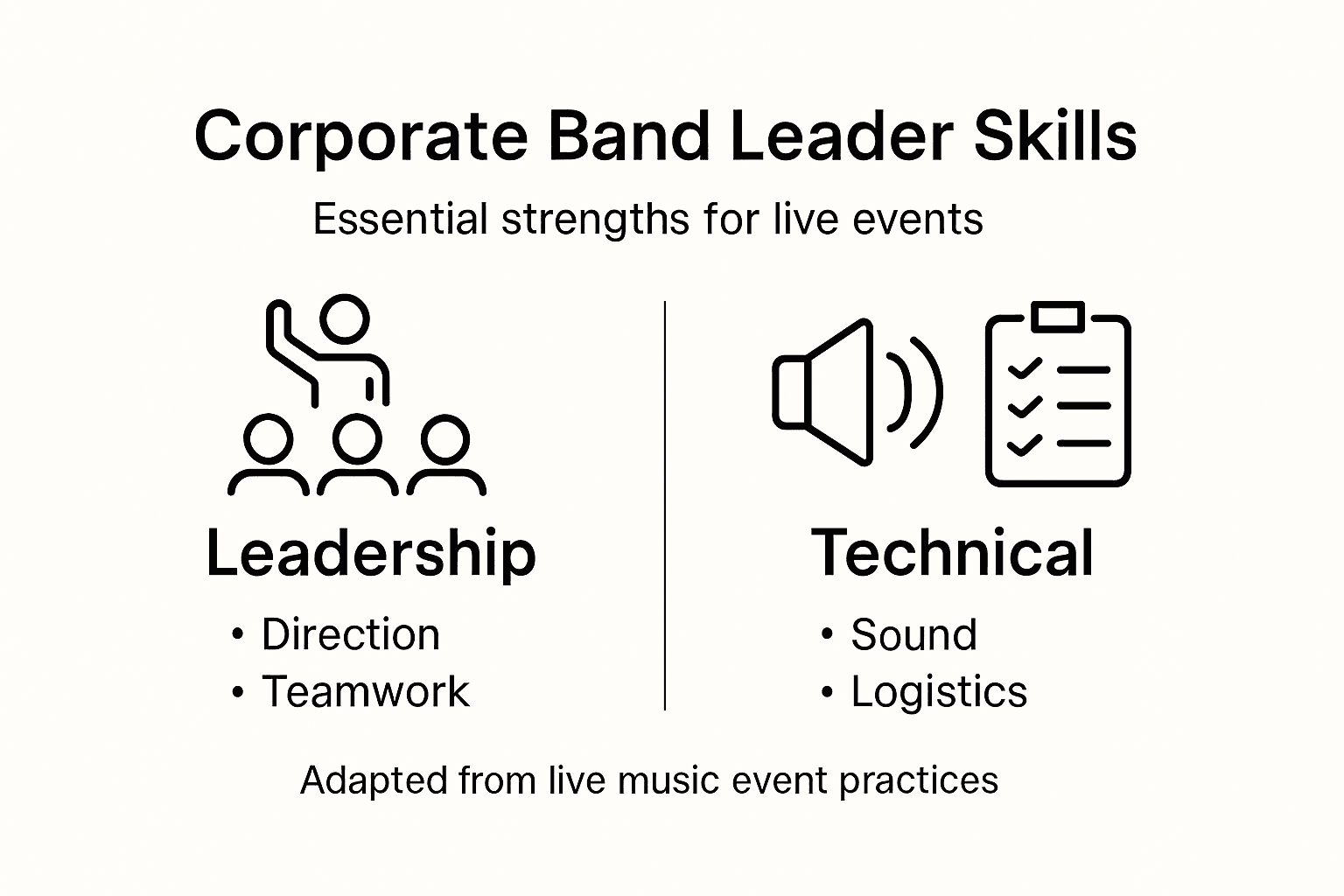
Technical skills complement the band leader’s artistic capabilities. Proficiency in sound engineering, stage management, and performance logistics ensures smooth execution of corporate events. The ability to quickly adapt musical arrangements, manage equipment setup, and maintain professional standards distinguishes top-tier Oompah band leaders from average performers. They must seamlessly blend technical precision with artistic spontaneity, creating memorable musical experiences that resonate with corporate audiences.
To clarify essential skills for Oompah band leaders, see this summary:
| Skill Category | Example Application | Value in Corporate Setting |
|---|---|---|
| Musical Expertise | Arranging Bavarian tunes and polkas | Ensures authentic, high-quality musical experience |
| Cultural Intelligence | Adapting style for international audiences | Enhances relevance and audience engagement |
| Performance Management | Coordinating on-stage roles and transitions | Maintains professionalism and seamless show flow |
| Technical Proficiency | Troubleshooting sound equipment | Enables smooth execution and minimises disruptions |
Pro tip: Invest in continuous musical training and cultural education to maintain the authenticity and adaptability required for outstanding Oompah band leadership.
Musical Direction and Event Coordination
The intricate dance of musical direction and event coordination represents the critical backbone of successful corporate live performances. Band leaders must masterfully navigate the complex intersection of artistic expression and professional event management, transforming musical performance into a precisely choreographed corporate experience.
Musical coordination in live performances demands extraordinary synchronisation skills, requiring band leaders to create seamless interactions between musicians while maintaining flexibility for spontaneous artistic moments. This involves developing shared musical intentions, reading subtle performance cues, and making instantaneous collaborative decisions that elevate the overall musical experience. Corporate events particularly demand this nuanced approach, where musical performances must align precisely with organisational objectives and audience expectations.
Effective event coordination extends far beyond musical logistics. Band leaders must function as comprehensive project managers, coordinating multiple complex elements simultaneously. This includes managing technical sound requirements, negotiating performance schedules, liaising with venue technical teams, and ensuring every musical and logistical aspect meets the highest professional standards. Communication becomes paramount, with band leaders serving as the critical interface between musical performers, corporate event planners, and venue management.
Technical proficiency combines with artistic vision to create truly memorable corporate musical experiences. The band leader must possess a holistic understanding of sound engineering, stage dynamics, and audience engagement strategies. This requires not just musical expertise, but also advanced interpersonal skills to manage diverse team dynamics, handle unexpected challenges, and maintain exceptional performance quality under high-pressure corporate environments.
Pro tip: Develop a comprehensive pre-event communication protocol that clarifies expectations, technical requirements, and performance parameters with all stakeholders.
Audience Engagement and Performance Management
Audience engagement represents the critical heartbeat of successful corporate live musical performances, transforming passive spectators into active participants in an immersive musical experience. Band leaders must strategically craft interactions that transcend traditional performance boundaries, creating memorable moments that resonate deeply with corporate event attendees.
Live event participation strategies demand sophisticated approaches that integrate cognitive, emotional, and behavioural elements. This requires band leaders to design performance experiences that invite audience interaction, recognise individual and collective energy dynamics, and create flexible musical narratives that respond to real-time audience reactions. Corporate events particularly benefit from this nuanced engagement approach, where music becomes a collaborative dialogue rather than a unidirectional performance.
Successful performance management involves understanding audience psychology and creating multiple interactive touchpoints throughout the musical experience. Band leaders must develop keen observational skills to read audience mood, adapt musical selections dynamically, and create moments of surprise and connection. This might involve spontaneous musical transitions, targeted song selections that reflect corporate event themes, or interactive segments that invite audience participation through rhythmic engagement or musical call-and-response techniques.
Technical and emotional intelligence converge in sophisticated audience management. Band leaders must balance precise musical execution with intuitive responsiveness, maintaining professional performance standards while creating an authentic, spontaneous atmosphere. This requires a delicate choreography of musical expertise, emotional awareness, and strategic performance design that transforms corporate events from mundane gatherings into extraordinary musical experiences.
Pro tip: Develop a flexible performance framework that allows for spontaneous audience interaction while maintaining core musical integrity.
Managing Risks and Logistical Challenges
Corporate live music performances demand meticulous risk management and logistical precision, where seemingly minor oversights can dramatically compromise the entire event experience. Band leaders must function as strategic orchestrators, anticipating potential challenges and developing robust contingency frameworks that ensure seamless musical delivery under diverse and unpredictable circumstances.
Sophisticated event logistics infrastructure requires comprehensive planning that integrates technological innovations, stakeholder collaboration, and adaptive problem-solving strategies. This involves creating multi-layered risk mitigation approaches that address technical equipment failures, performance scheduling complexities, venue constraints, and potential personnel challenges. Successful band leaders develop sophisticated communication protocols and backup systems that can rapidly respond to unexpected disruptions without compromising performance quality.
Technical risk management extends beyond equipment preparation to include comprehensive personnel coordination, venue assessment, and contingency planning. Band leaders must conduct thorough pre-event venue inspections, understand acoustic characteristics, assess potential sound interference sources, and develop flexible performance strategies that can adapt to varying environmental conditions. This includes having redundant sound equipment, understanding backup power requirements, and training band members in rapid equipment replacement techniques.
Effective logistical management also encompasses legal and safety considerations specific to corporate event environments. Band leaders must navigate complex regulatory requirements, ensure appropriate performance licences, manage insurance protocols, and maintain strict adherence to corporate event safety standards. This requires developing comprehensive documentation, maintaining clear communication channels with event organisers, and demonstrating professional accountability throughout the performance preparation and execution stages.
Pro tip: Create a comprehensive event risk management checklist that covers technical, personnel, and regulatory considerations at least two weeks before each corporate performance.
Elevate Your Corporate Event with Expert Band Leadership
The success of a corporate live show hinges on the band leader’s ability to blend musical mastery with professional event coordination. If you recognise the challenge of finding a leader who excels in managing dynamic audience engagement, seamless transitions, and authentic Oompah music fluency, you are one step closer to an extraordinary event experience. At Elmar’s Oompah Band, our band leader embodies these critical skills and cultural expertise to deliver performances that resonate across Europe and the Arabian Peninsula.
Discover how our band leader’s flexible musical direction and real-time audience connection can transform your corporate gathering into a memorable celebration. Explore our insights into Allgemein – Oompah Band to learn more about our approach. Act now to secure a band that not only honours traditional Bavarian music but also adapts expertly to your event’s unique needs. Visit Elmar’s Oompah Band and take the next step to engaging your guests with authentic, high-quality live music led by true professionals.
Frequently Asked Questions
What is the primary role of a band leader in corporate live shows?
The primary role of a band leader in corporate live shows is to manage the musical direction and coordination, ensuring that performances align with the event’s objectives while engaging the audience effectively.
How does a band leader enhance audience engagement during performances?
A band leader enhances audience engagement by creating interactive musical experiences, adapting to audience reactions, and incorporating spontaneous elements into the performance to foster a collaborative atmosphere.
What skills are essential for a band leader in Oompah bands?
Essential skills for a band leader in Oompah bands include musical expertise, cultural understanding, performance management, and technical proficiency to ensure a high-quality and authentic musical experience.
What should be considered for effective event coordination in live music performances?
Effective event coordination in live music performances requires meticulous planning, clear communication among stakeholders, managing technical logistics, and ensuring adaptability to unforeseen circumstances.